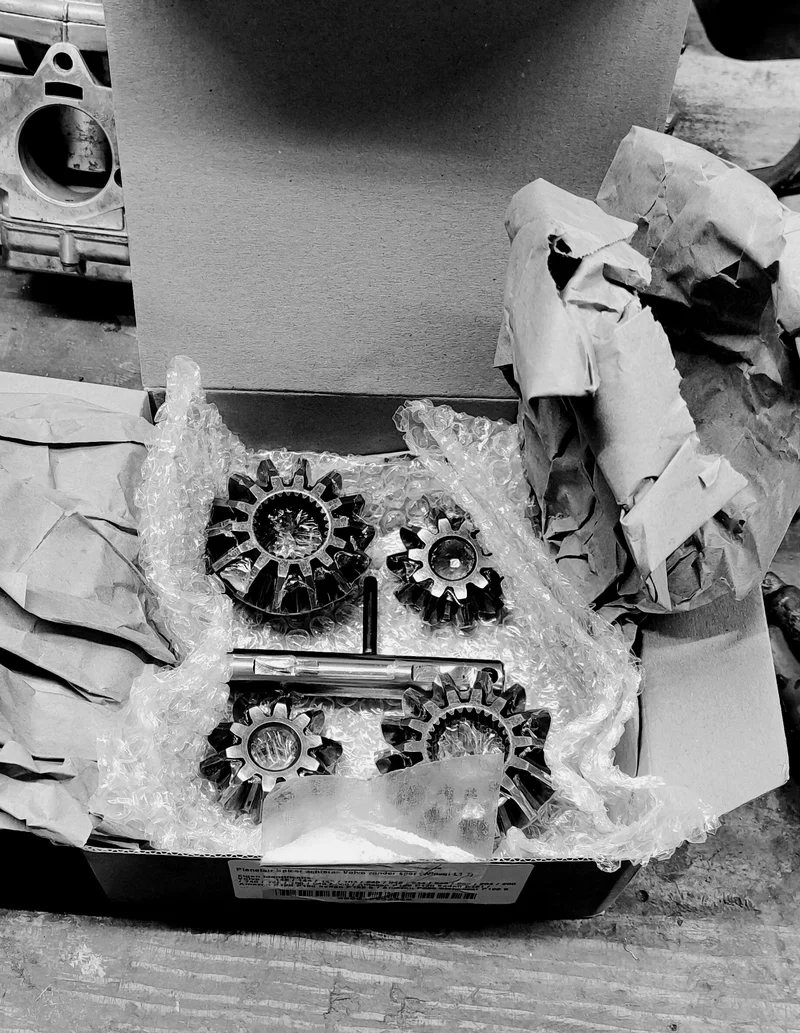
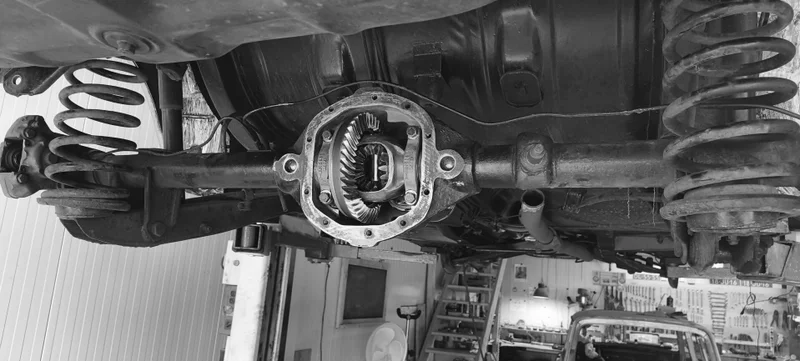
Dana 30 - Differential
No swarf, but plenty of trouble: the silent wear of the Dana 30
A singing drivetrain, vibration in the transmission tunnel and noticeable play in the half shafts. These are typical complaints with which a classic arrives at the workshop. With this Dana 30 differential, one thing became clear as soon as the cover was lifted: someone had already been at work in here. That makes diagnosis extra challenging, because once the originality is gone, you cannot simply trust what you find.
Searching for the real cause
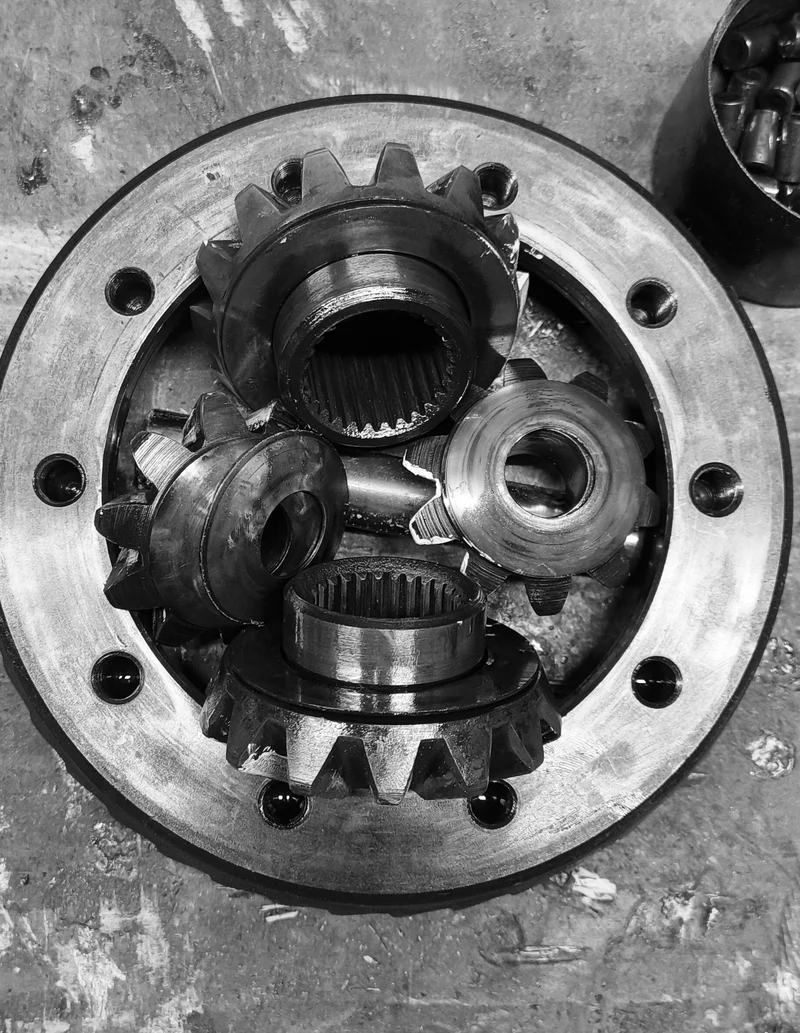
At first glance there seemed to be little wrong: no alarming metal swarf in the oil, and the contact pattern between the crown wheel and pinion looked surprisingly neat. Yet the symptoms while driving betrayed that something was seriously wrong inside. When the mechanism was meticulously dismantled and measured, the truth came out. The cross pin carrying the spider gears proved to be worn. That minimal play on the cross pin caused a chain reaction of play throughout the entire drivetrain.
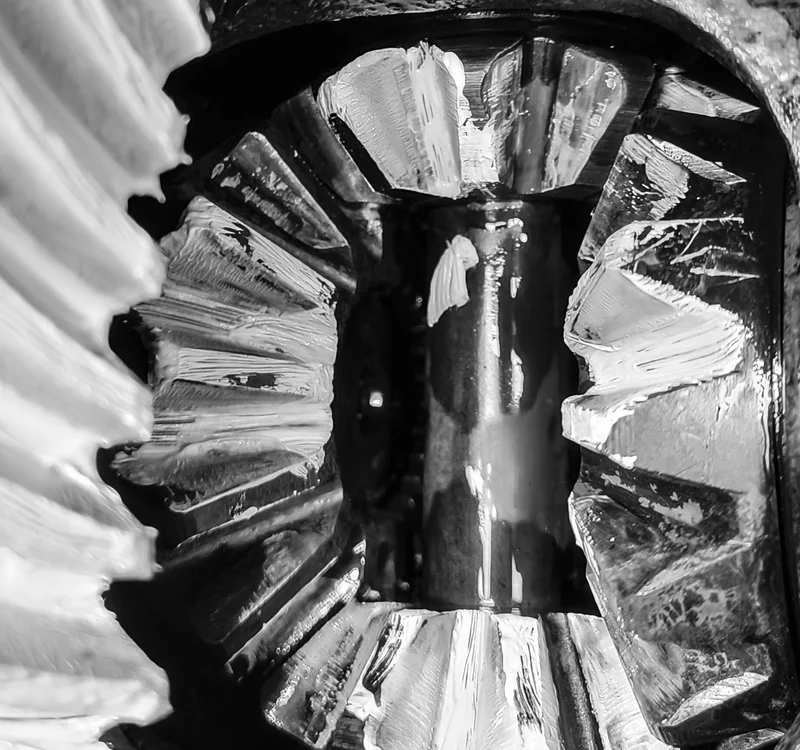
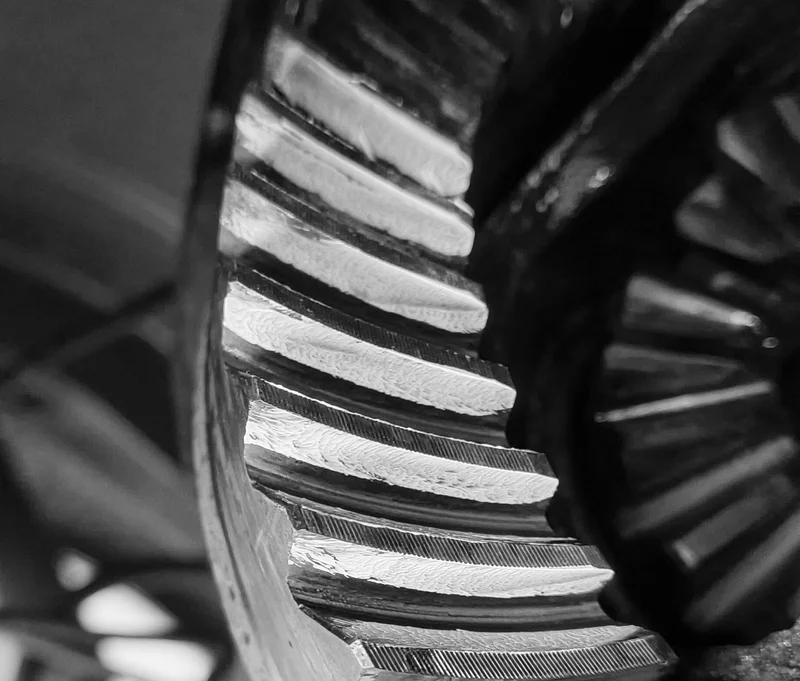
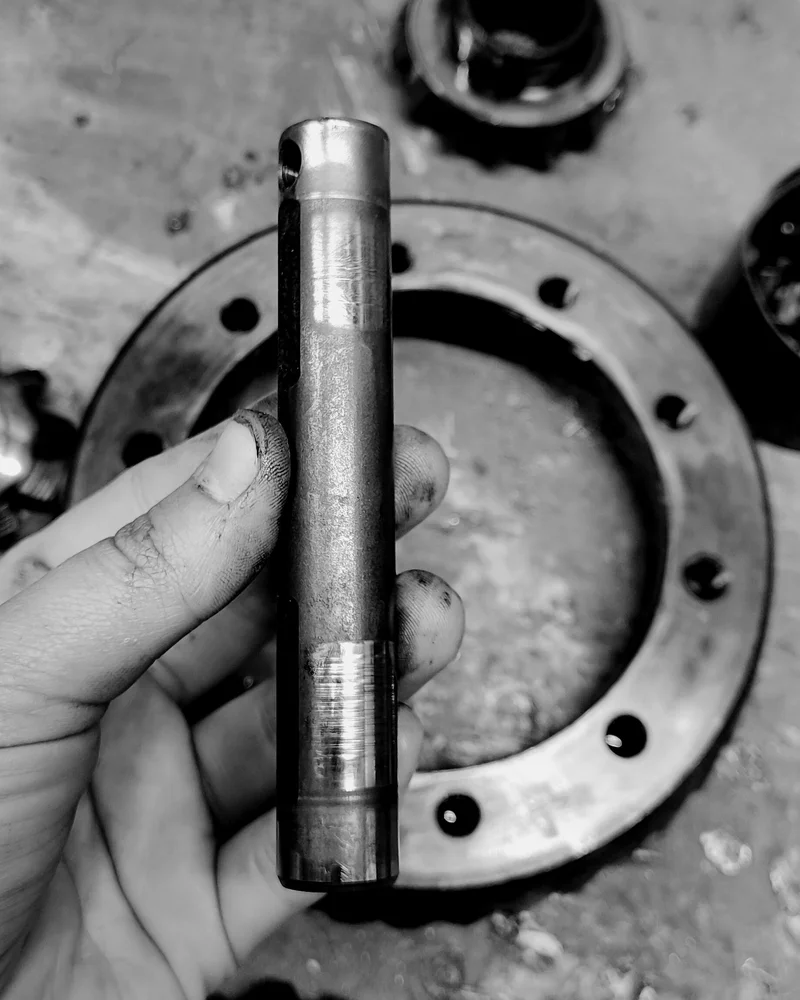
In addition to the play in the spider gears, the crown wheel and pinion turned out to have seen better days. Despite the attractive contact pattern, a distinct, hard wear ridge had formed on the teeth. It was precisely this ridge that, under load, caused the whistling and humming noise that resonated through the bodywork. A good contact pattern alone is not enough; the tolerances and the condition of the teeth must be right across the entire surface.
Accuracy to a hundredth of a millimetre
Repairing a differential such as the Dana 30 is a skilful puzzle. It requires carefully measuring the preload on the bearings, fitting the differential carrier free of play and setting the pinion to exactly the right depth with the correct shims. Only when the play in the half shafts has disappeared and the crown wheel and pinion mesh silently again may the cover finally go back on.
Measuring and repairing a differential that has already been 'worked on' requires patience and a sharp eye. But the result speaks for itself: the play in the propshaft has gone, the vibration has disappeared and the drivetrain runs once again as it did when it left the factory — silent and rock solid.